
Legal Insights
Legal Insights
Income Tax in Nepal: Rates, Filing Deadlines & What You Need to Know
2026-04-30
Admin
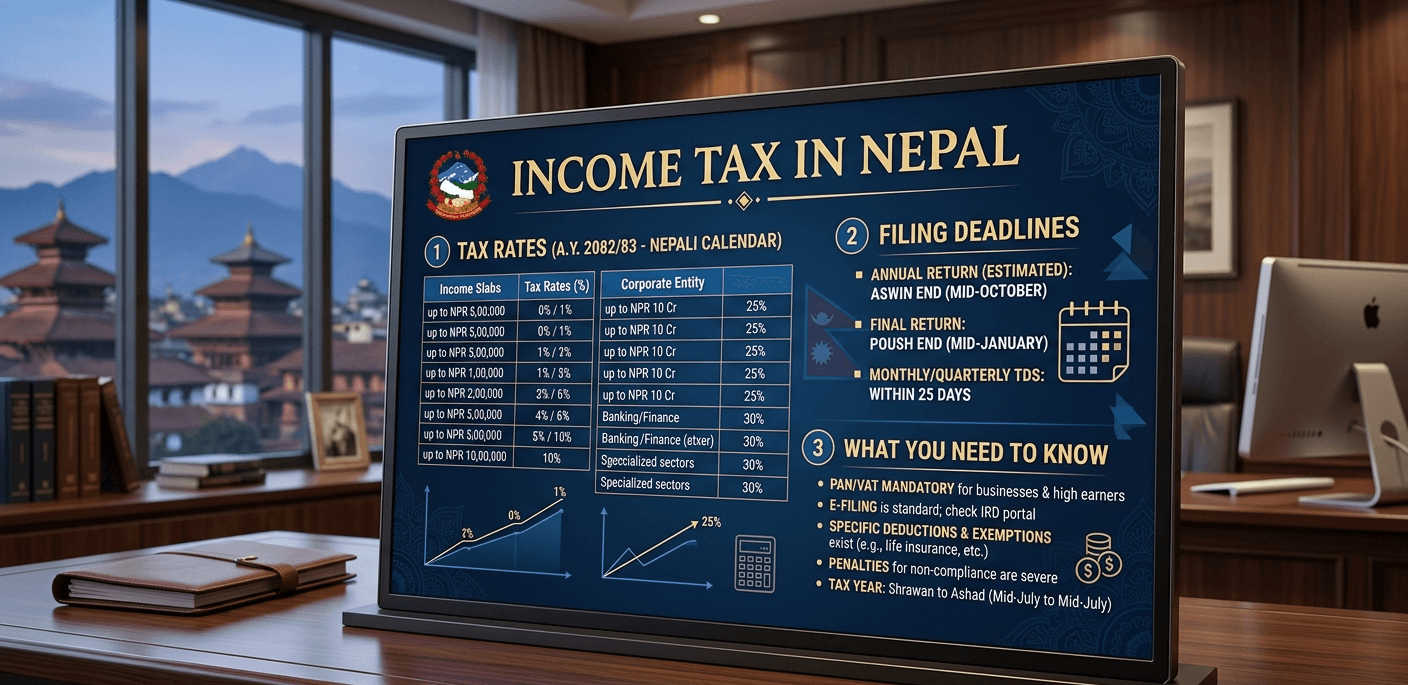
Income tax is one of the most important financial obligations for individuals and businesses in Nepal. Whether you are an employee, freelancer, entrepreneur, or company owner, understanding income tax in Nepal is essential to stay legally compliant and avoid penalties.
The tax system in Nepal is governed by the Income Tax Act, 2058 (2002) and regulated by the Inland Revenue Department (IRD). It applies to income earned from salaries, business activities, investments, rent, and other sources.
This guide explains income tax rates, filing deadlines, calculation methods, exemptions, penalties, and compliance tips in a simple and practical way.
Income tax is a direct tax imposed by the Government of Nepal on the income earned by individuals and organizations. It is one of the major sources of government revenue and is used for national development, infrastructure, and public services.
Income tax applies to:
Salaries and wages
Business profits
Rental income
Investment earnings
Foreign income (in certain cases)
If you earn income in Nepal, you are generally required to register for a PAN (Permanent Account Number) and file tax returns annually.
Income tax applies to:
Salaried employees (private and government sectors)
Self-employed professionals (lawyers, consultants, freelancers)
Businesses and companies (Pvt. Ltd., partnerships, etc.)
Foreigners earning income in Nepal
Organizations and NGOs (as per applicable rules)
If you earn income in Nepal, you are generally required to register for a PAN (Permanent Account Number) and file tax returns.
Income tax rates vary depending on whether you are an individual or a company.
For individuals, tax is calculated based on income slabs. Higher income leads to higher tax rates.
General structure includes:
Lower income brackets: 1% – 10%
Middle income brackets: 10% – 20%
Higher income brackets: 20% – 36% (approx.)
The exact rate may vary depending on marital status, gender category, and government revisions.
For companies:
Standard corporate tax rate: around 25%
Special industries (banking, insurance, telecom): may have different rates
Small businesses may enjoy simplified tax structures
Apart from income tax, other taxes include:
VAT (Value Added Tax): 13% (on applicable goods/services)
TDS (Tax Deducted at Source) on salary, rent, and contracts
Advance tax payments for businesses
Income tax is calculated based on taxable income, not total income.
Taxable Income = Total Income – Allowable Deductions
Insurance premiums
Retirement contributions (SSF)
Approved donations
Business expenses
Depreciation on assets
Once taxable income is calculated, the applicable tax slab is applied.
Filing income tax returns is mandatory for eligible taxpayers.
Every taxpayer must register with the Inland Revenue Department (IRD) and obtain a PAN number.
Keep proper records of:
Income statements
Salary slips
Business invoices
Expense receipts
Deduct eligible expenses and exemptions to determine final taxable income.
Submit tax returns through:
IRD online portal, or
Physical submission at tax office
Pay any outstanding tax before the deadline to avoid penalties.
The standard tax year in Nepal runs from Shrawan to Ashadh (mid-July to mid-July).
Key Deadlines:
Tax return filing: usually within 3 months after fiscal year-end
Extensions: may be granted in special cases
Advance tax payments: quarterly for businesses
Missing deadlines can result in penalties and interest charges.
Failure to comply with tax laws may result in:
Late filing fees
Interest on unpaid tax
Fines imposed by IRD
Legal action in severe cases
Proper compliance is important to avoid unnecessary financial burden.
Taxpayers in Nepal may be eligible for deductions such as:
Insurance premiums
Retirement contributions (SSF)
Approved donations
Business-related expenses
Depreciation on assets
These deductions help reduce taxable income legally.
Businesses must comply with corporate tax laws, including:
Registration with IRD (PAN/VAT)
Maintaining audited financial statements (for companies)
Filing annual tax returns
Paying advance tax (if applicable)
For startups, proper tax planning is part of the legal requirements for startups in Nepal and helps avoid compliance risks.
Many taxpayers make avoidable mistakes such as:
Not registering for PAN
Missing filing deadlines
Incorrect income reporting
Not maintaining financial records
Ignoring tax deductions
These errors can lead to penalties and audits.
Register for PAN early
Maintain accurate financial records
File taxes before deadlines
Use professional accounting support if needed
Stay updated on tax law changes
Income tax in Nepal is a crucial part of financial responsibility for both individuals and businesses. Understanding the tax system, rates, deadlines, and filing procedures ensures compliance and helps avoid unnecessary penalties.
By maintaining proper records, filing on time, and using legal deductions, taxpayers can manage their obligations efficiently. Whether you are an employee or a business owner, proper tax planning is essential for financial stability and long-term success in Nepal.
Yes, PAN registration is required for all taxpayers.
Individuals, businesses, employees, and organizations earning income in Nepal.
Generally around 25%, depending on the sector.
Usually within 3 months after the fiscal year ends.
You may face penalties, interest, and legal action.