
Legal Insights
Legal Insights
Intellectual Property Law in Nepal: Copyright, Patents & Trademarks Explained
2026-04-30
Admin
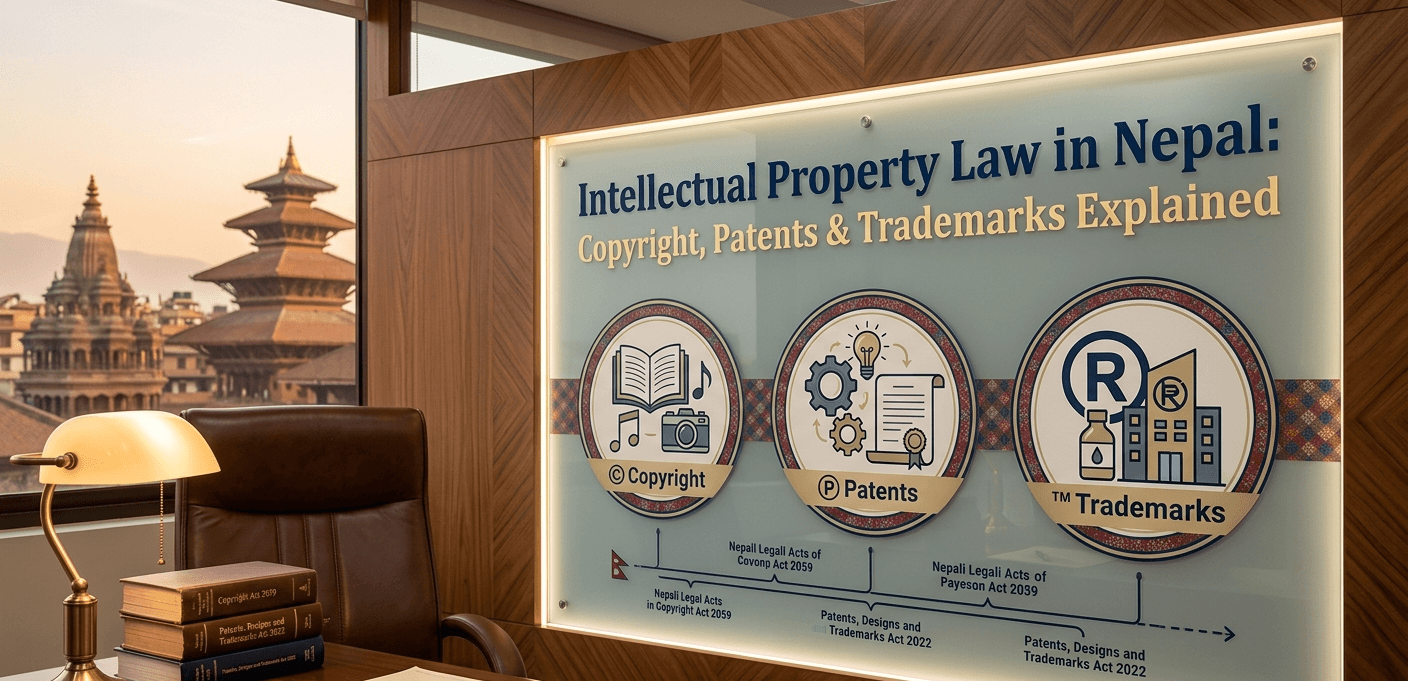
In today’s knowledge-driven economy, ideas, creativity, and innovation are valuable assets. Whether you are an entrepreneur, artist, developer, or business owner, protecting your intellectual property is essential to prevent misuse and maintain a competitive edge.
Intellectual Property Law in Nepal provides legal protection for creations of the mind, including artistic works, inventions, and brand identities. Understanding how copyright, patents, and trademarks work can help individuals and businesses safeguard their rights and avoid legal disputes.
This guide explains the key aspects of IP law in Nepal, including legal frameworks, types of intellectual property, registration processes, and practical tips for protection.
Intellectual Property (IP) refers to creations of the mind, such as:
Literary and artistic works
Inventions and innovations
Brand names, logos, and symbols
Designs and trade secrets
IP rights give creators exclusive control over how their work is used, distributed, or commercialized.
Intellectual property in Nepal is governed by specific laws and regulations, including:
Copyright Act, 2002 (2059 BS)
Patent, Design and Trademark Act, 1965 (2022 BS)
These laws are enforced by government authorities such as the Department of Industry (DOI) and relevant regulatory bodies.
The purpose of these laws is to:
Protect creators and innovators
Encourage creativity and innovation
Prevent unauthorized use or infringement
Promote economic growth and fair competition
Copyright protects original works of authorship. This includes:
Books, articles, and written content
Music, films, and artistic works
Software and digital content
Key Features of Copyright
Protection is automatic upon creation
Registration is optional but recommended
Grants exclusive rights to reproduce, distribute, and display the work
Duration of Copyright
Copyright protection generally lasts for the lifetime of the author plus additional years (as defined by law).
Why Copyright Protection Matters
Prevents unauthorized copying or distribution
Protects creative ownership
Ensures creators receive financial benefits
A trademark is a symbol, name, logo, or design that identifies a business or product.
Examples of Trademarks
Brand names
Logos
Taglines or slogans
Importance of Trademark Registration
Protects brand identity
Prevents competitors from using similar marks
Builds trust and recognition in the market
Trademark Registration Process in Nepal
Conduct a trademark search
File an application with the Department of Industry
Examination and publication
Registration upon approval
Validity of Trademark
Trademarks are typically valid for a certain period and can be renewed.
A patent protects new inventions, processes, or technologies.
What Can Be Patented?
Innovative products
Technical processes
Industrial inventions
Key Features of Patents
Must be new, useful, and non-obvious
Grants exclusive rights to the inventor
Prevents others from making, using, or selling the invention without permission
Patent Registration Process
Submit application with detailed description
Examination by authorities
Approval and registration
Validity of Patents
Patents are granted for a limited period, after which they enter the public domain.
Protecting intellectual property offers several benefits:
Exclusive Rights – Control how your work or invention is used
Business Advantage – Strengthens brand value and market position
Revenue Generation – Licensing and commercialization opportunities
Legal Protection – Ability to take action against infringement
Without proper protection, your ideas and creations may be copied or misused without your consent.
Despite legal protections, individuals and businesses often face challenges such as:
Lack of awareness about IP rights
Unauthorized use or copying of content
Trademark conflicts and brand imitation
Complex registration procedures
Weak enforcement in some cases
Addressing these challenges requires awareness, proper registration, and legal support.
While some rights are automatic, registration strengthens your legal protection.
Before registering a trademark or patent, ensure it is unique and not already in use.
Non-disclosure agreements (NDAs) and contracts help protect confidential information.
Regularly check for unauthorized use of your work or brand.
If your rights are violated, legal remedies can help enforce your ownership.
For startups and growing businesses, intellectual property is a valuable asset. Protecting your IP helps:
Build a strong brand identity
Attract investors and partners
Prevent competitors from copying your ideas
Increase business valuation
Startups should prioritize trademark registration and protect their unique innovations early.
Violating intellectual property rights can lead to:
Fines and monetary penalties
Seizure of infringing goods
Legal action and compensation claims
Business reputation damage
Strong enforcement ensures that creators and businesses are protected under the law.
Register your trademark as early as possible
Keep records of your creative work and inventions
Avoid sharing confidential ideas without legal protection
Stay informed about IP laws and updates
Seek professional legal guidance for registration and disputes
Intellectual Property Law in Nepal plays a crucial role in protecting creativity, innovation, and business identity. Whether it is copyright, trademarks, or patents, understanding and securing your rights is essential in today’s competitive environment.
By taking proactive steps such as registration, monitoring, and legal compliance, individuals and businesses can safeguard their intellectual assets and prevent misuse. A strong intellectual property strategy not only protects your work but also enhances your long-term success and growth.
No, copyright protection is automatic, but registration provides stronger legal evidence.
It may take several months depending on the examination and approval process.
Yes, foreign entities can register trademarks subject to legal requirements.
Abstract ideas, natural discoveries, and non-industrial inventions are generally not patentable.
You can register it as a trademark with the Department of Industry.
You should seek legal advice and take action through appropriate legal channels.