
Legal Insights
Legal Insights
Legal Requirements for Startups in Nepal: What You Must Do Before Launching
2026-04-29
Admin
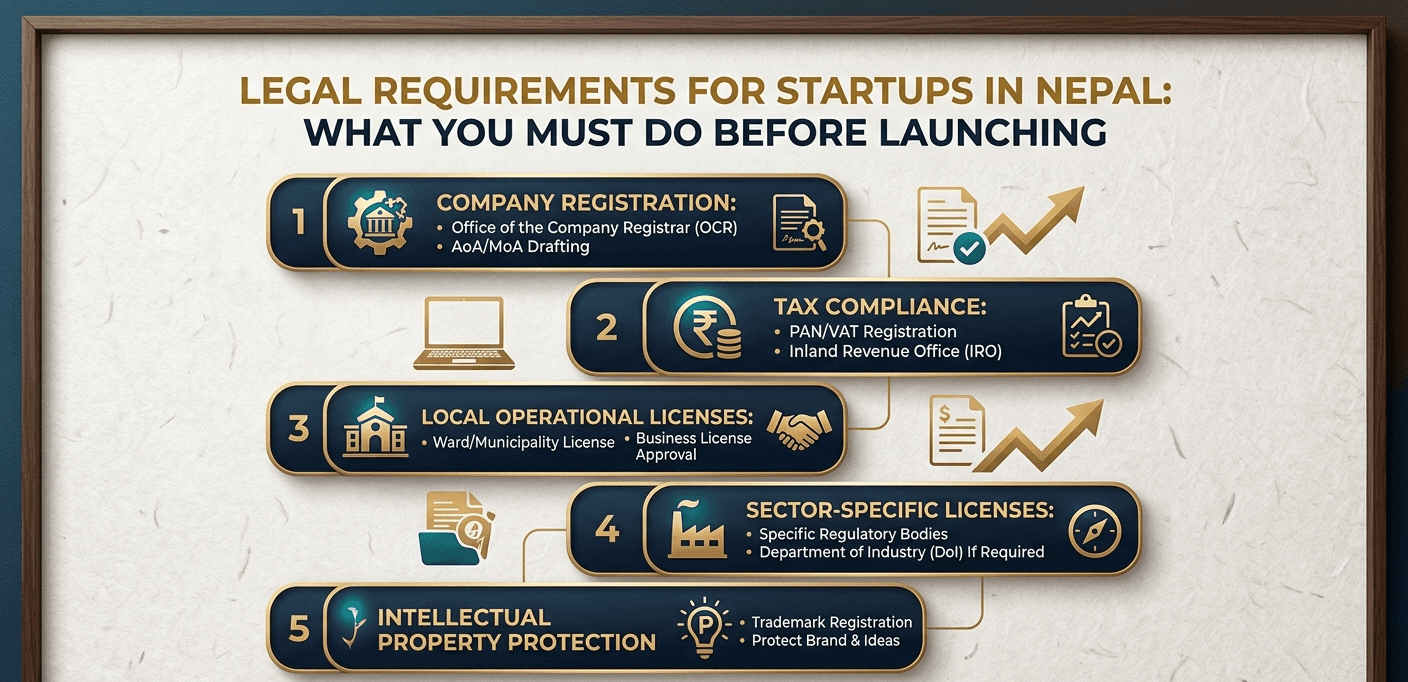
Starting a startup in Nepal is an exciting journey, but it also comes with important legal responsibilities. Many entrepreneurs focus on product development, funding, and marketing, often overlooking legal compliance in the early stages. However, failing to meet legal requirements can lead to fines, disputes, or even business closure.
Understanding the legal requirements for startups in Nepal is essential before launching your business. This guide covers everything you need to know from company registration and licenses to tax compliance and intellectual property protection so you can start your venture on a strong legal foundation.
Legal compliance ensures that your startup operates smoothly and avoids unnecessary risks. Proper legal setup helps you:
Build credibility with investors, customers, and partners
Avoid penalties, fines, and legal disputes
Protect your business name, assets, and intellectual property
Ensure smooth operations and long-term growth
Gain access to funding and government support
Ignoring legal requirements can create serious problems that may be costly and difficult to resolve later.
The first legal step for any startup is selecting the appropriate business structure. In Nepal, common options include:
Owned and managed by one individual
Easy to set up and low compliance requirements
Owner has unlimited liability
Owned by two or more individuals
Governed by a partnership agreement
Shared responsibilities and profits
Separate legal entity
Limited liability for shareholders
Ideal for startups seeking growth and investment
Choosing the right structure affects taxation, liability, and business operations, so it should be decided carefully.
If you choose to register a Private Limited Company, you must complete the registration process through the Office of the Company Registrar (OCR).
Key steps include:
Reserving a unique company name
Preparing Memorandum of Association (MOA) and Articles of Association (AOA)
Submitting required documents and fees
Obtaining a Certificate of Incorporation
Once registered, your startup becomes a legally recognized entity.
Every startup must register with the Inland Revenue Department (IRD):
PAN (Permanent Account Number) – Mandatory for all businesses
VAT Registration – Required if your business exceeds the VAT threshold or deals with taxable goods/services
Proper tax registration ensures compliance and smooth financial operations.
Depending on your business type, additional licenses may be required. These include:
Local government or municipal permits
Industry-specific licenses (tourism, health, education, etc.)
Import/export licenses for trading businesses
Failure to obtain the necessary permits can result in penalties or business closure.
After registration, you must open a bank account in your company’s name. This is important for:
Managing business transactions
Maintaining financial transparency
Receiving payments from clients or investors
Separating personal and business finances is crucial for proper accounting and legal compliance.
Legal agreements protect your startup from disputes and misunderstandings. Important documents include:
Founder agreements
Shareholder agreements
Employment contracts
Vendor or service agreements
Non-disclosure agreements (NDAs)
Properly drafted contracts ensure clarity, define responsibilities, and reduce legal risks.
Startups hiring employees must comply with Nepal’s labour laws. Key requirements include:
Providing written employment contracts
Paying minimum wages and overtime
Ensuring workplace safety
Registering employees with the Social Security Fund
Following labour laws helps build a fair and productive work environment.
Intellectual property is one of the most valuable assets for startups. Protecting your IP ensures that your ideas and brand are secure.
Key steps include:
Registering your trademark (business name, logo, slogan)
Protecting copyrights for creative content
Safeguarding proprietary technology or processes
IP protection prevents competitors from copying your brand or innovation.
Startups must comply with Nepal’s tax regulations. This includes:
Filing regular tax returns
Maintaining proper accounting records
Paying corporate taxes and VAT (if applicable)
Complying with financial reporting requirements
Proper financial management reduces the risk of audits, penalties, and legal issues.
If your startup involves foreign investors, you must comply with foreign investment laws in Nepal. This includes:
Approval from the Department of Industry or Investment Board Nepal
Compliance with the Foreign Investment and Technology Transfer Act (FITTA)
Proper documentation of foreign capital inflow
Foreign investment requires additional legal procedures, so careful planning is essential.
With the rise of digital startups, data protection is increasingly important. Startups must:
Protect customer data and privacy
Comply with Nepal’s cyber laws
Avoid unauthorized use of personal or financial data
Failure to comply can result in legal action and loss of customer trust.
Skipping proper business registration
Ignoring tax and compliance requirements
Not drafting clear legal agreements
Failing to protect intellectual property
Mixing personal and business finances
Hiring employees without proper contracts
Avoiding these mistakes can save your startup from serious legal challenges.
Plan your legal structure before starting operations
Register your business and obtain necessary licenses
Maintain proper documentation and records
Stay updated on laws and regulations
Seek professional legal advice when needed
A strong legal foundation supports long-term growth and success.
Launching a startup in Nepal involves more than just a great idea; it requires careful attention to legal requirements. From company registration and tax compliance to intellectual property protection and employment laws, each step plays a crucial role in building a successful business.
Understanding and following the legal requirements for startups in Nepal helps you avoid risks, protect your interests, and create a strong foundation for growth. By taking the right steps before launching, you can focus on scaling your business with confidence and clarity.
Yes, business registration is essential for legal recognition and compliance.
A Private Limited Company is generally preferred due to limited liability and scalability.
VAT registration is required if your business exceeds the threshold or deals with taxable goods/services.
No, operating without required permits can result in penalties or closure.
It protects your brand, products, and ideas from being copied or misused.
Yes, all businesses must comply with labour laws when hiring employees.